User Manual
RemoteCOM w/ Wi-Fi (C30 - C32)
- Introduction
- Configuration by the Web Page
- Configuration by the Telnet Console
- Configuration by the Serial Console
- Redisage Configurator
Introduction
Serial Port Server w/ Wi-Fi® (C30 - C32)
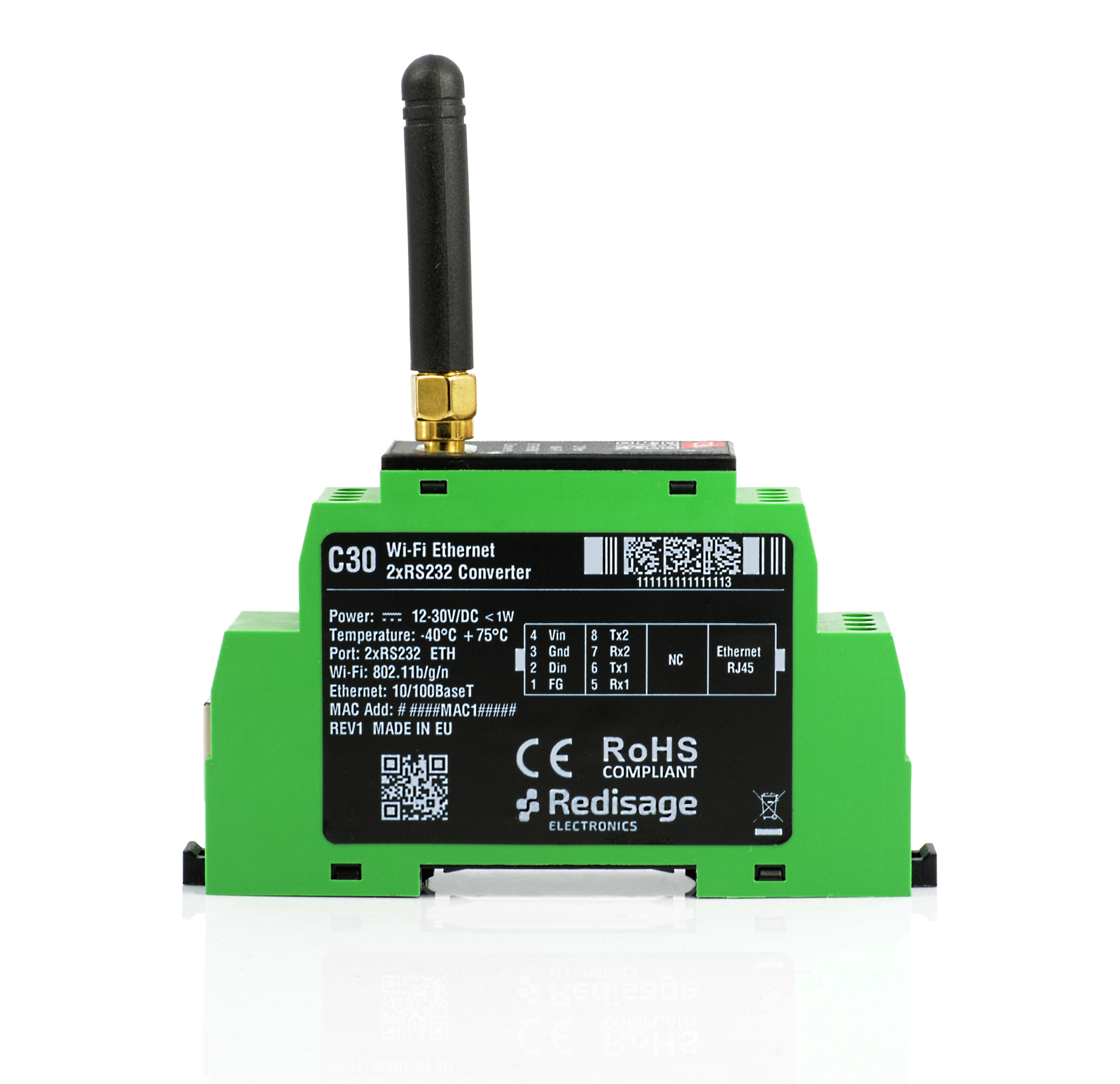
Serial Port Server is a complete hardware and software solution for creating remote communication ports. The software part can be uploaded to any of the Redisage C30 - C32 Ethernet Converters. It provides a communication between a LAN host and a device equipped with RS232/RS485 serial interfaces. A dedicated app makes it easy and fast to configure and deploy. There is a possibility to create virtual COM ports with the Redisage Configurator to minimize number of cables. Onboard Wi-Fi module makes it even more versatile and independent solution.
Configuration by the Web Page
Serial Port Server w/ Wi-Fi® (C30 - C32)
This page presents capabilities of the Ethernet Converters configuration. First of all, make sure that converter is connected to power supply and to the LAN using a patch cord. If the device has not static IP set up, it will be necessary to obtain its IP address in the local network. User interface is mostly similar for every converters but some subpages might be diffrent for several models depends on amount of interfaces. In order to avoid some issues, click on a “Help” button in the top right corner on every page.
Default configuration
Default configuration of the Ethernet Converters:
- IP address: 192.168.100.100
- Subnet mask: 255.255.255.0
- Gateway: 192.168.100.1
- DNS 1: 192.168.100.1
- DNS 2: 8.8.8.8
Default login details:
- User name: admin
- Password: admin123
Login
To access the web page open the browser, type IP address of the converter (default is 192.168.100.100). Then log in using user’s personal credentials. If it is a first configuration or the converter had a factory reset, then use default login details (login: admin, password: admin123).
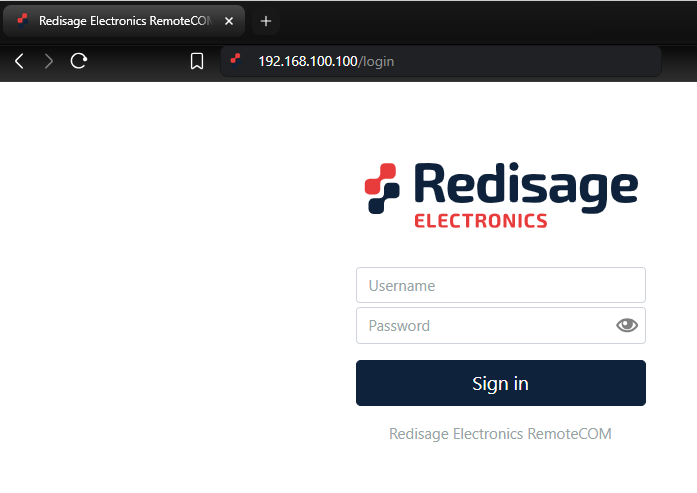
The configuration is available only if devices are connected to the same Local Area Network as the computer used for it.
Status page
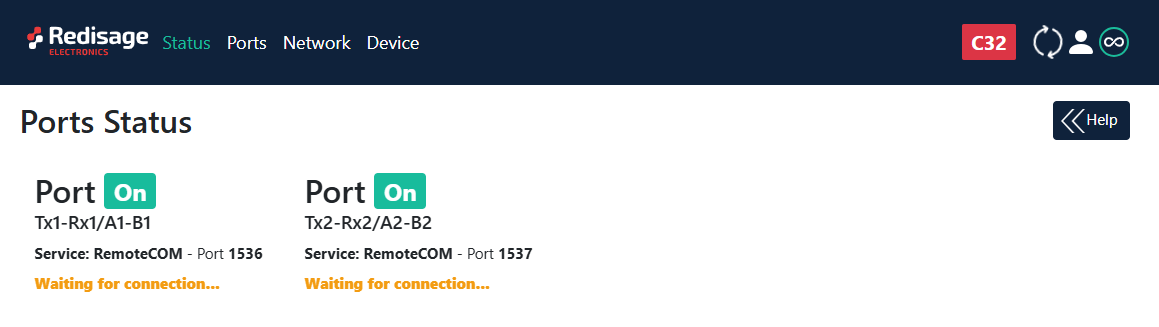
After a successful login, there should be an insight to important information such as port status, service and port which are in use and more details about the connection.
Changing username or password
After clicking “Edit User” under the user icon, it is possible to change the username or the password.

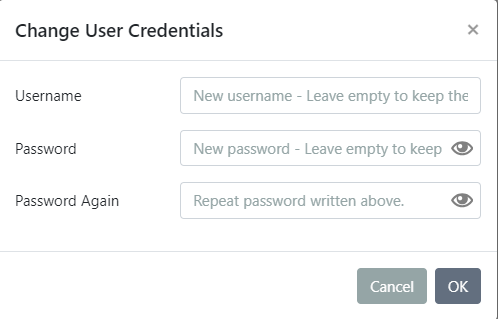
If login details were forgotten, it would be necessary to do a factory reset via a USB/UART converter and a serial console.
Ports page
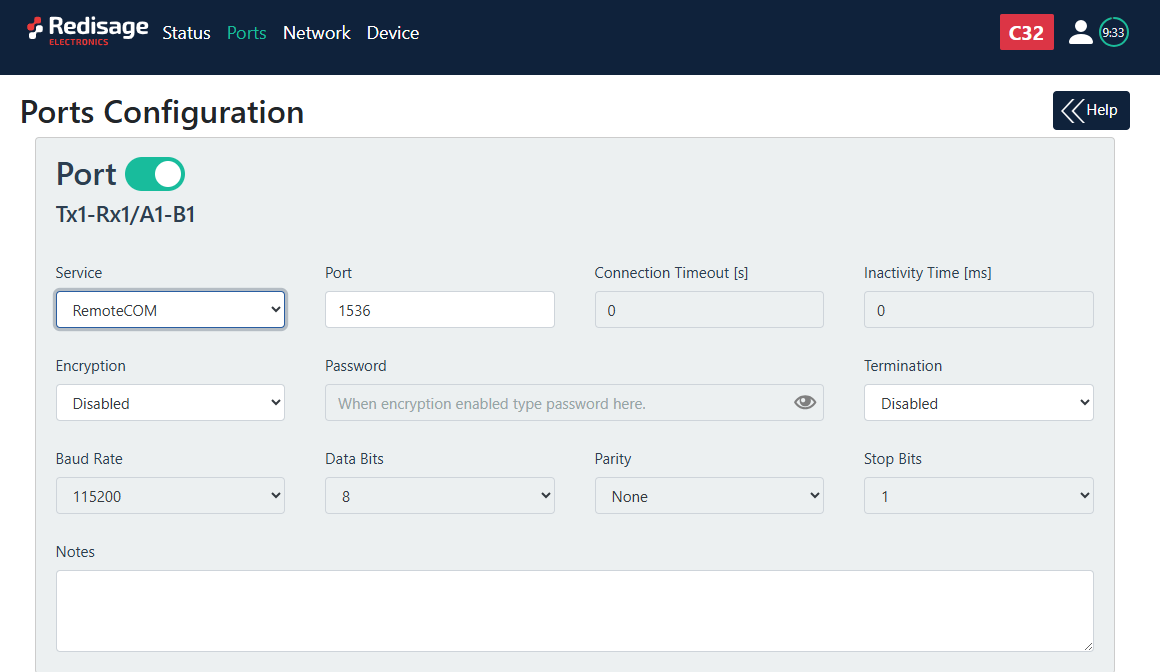
This page allows configuring the device’s ports. There is a toggle switch next to a “Port” label by which it is possible to turn ON/OFF any particular ports.
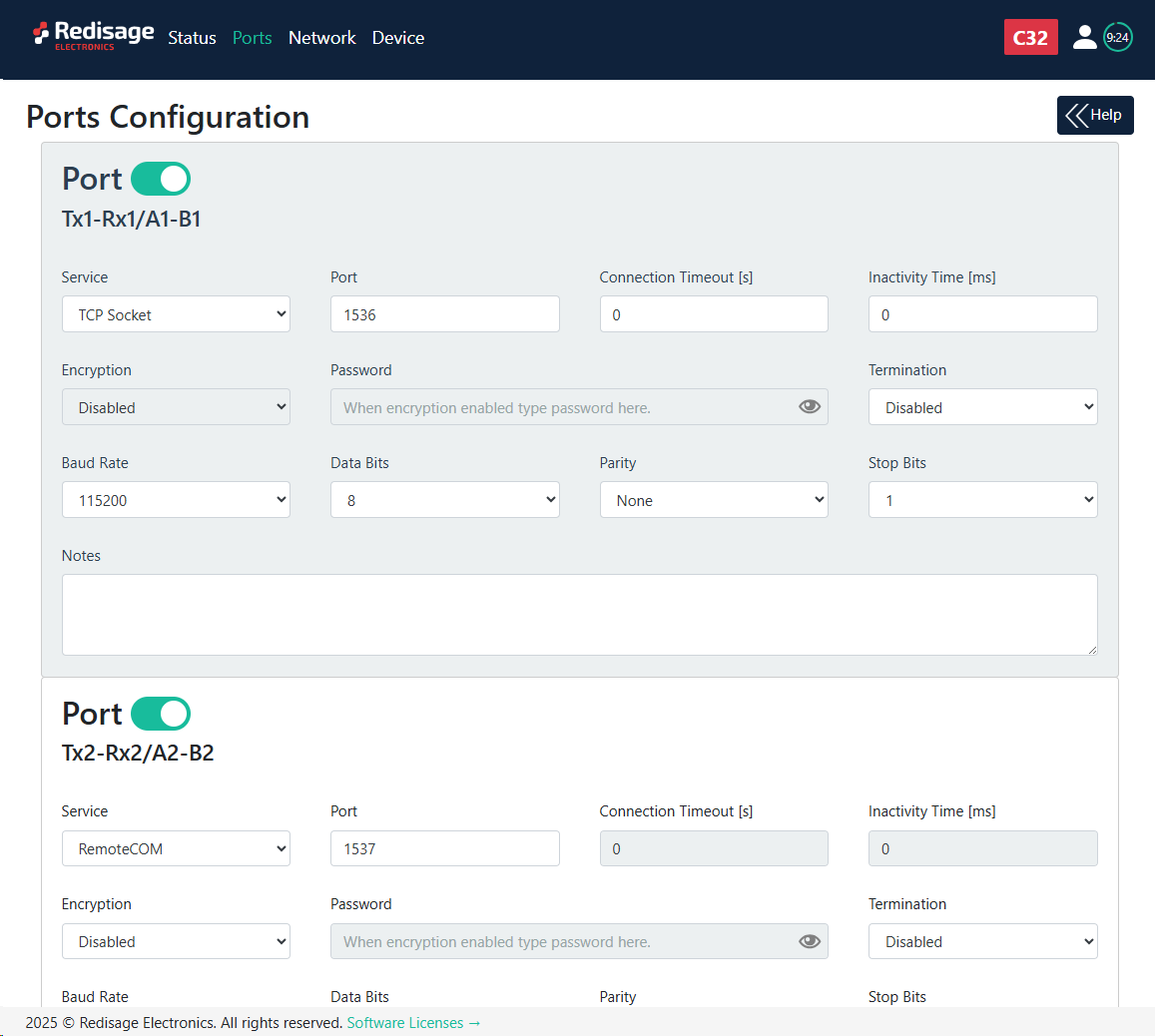
|
Item |
Description |
|
|
Service |
RemoteCOM |
The RemoteCOM option lets to attach the port to a computer running the Redisage Configurator as if it would be physically present in the computer. |
|
TCP Socket |
TCP/UDP Socket exposes this port as a regular network socket - connect to this socket with own software and write/read data to send/receive data over the serial port without any additional software or serial port handling. |
|
|
UDP Socket |
||
|
Port |
The service number - the device has an “IP Address” by which it is identified and a couple of services running on it. It's required to tell the device which service should be in use by entering this device's IP address and the port number in the RemoteCOM client or user’s software. |
|
|
Connection Timeout [s] |
The time specifying how often (every how many seconds) the "keep alive" packet will be sent to check if the client is still connected. Value 0 means that the connection is kept permanently without any timeout. |
|
|
Inactivity Time [ms] |
The maximum allowed time in milliseconds during which there is no data transfer. When connection is inactive for the time longer or equal to the entered value, then it will be closed. Value 0 means there is no measure of the inactivity time at all. |
|
|
Encryption |
Determine how the data is protected 'in flight' over a network. It is available only with the RemoteCOM service. Once enabled, it is necessary to set the password. |
|
|
Password |
Protect the communication between the device and various clients - keep it secret! Same settings have to appear in clients - without the correct passwords, a client will not be able to connect at all. |
|
|
Termination |
Enable/disable termination on the RS line. |
|
|
Baud Rate |
Determine the port's transmission speed over the data channel. |
|
|
Data Bits |
Determine the number of data bits in the port's message frame. |
|
|
Parity |
Enable/disable parity check in the port's message frame. |
|
|
Stop Bits |
Determine the number of stop bits in the port's message frame. |
|
|
Notes |
These notes are for information only - feel free to write down anything related to this port (device it connects to, etc.). They're also shown in the Configurator during the device discovery - in the other words, they're public. |
|
Changing port’s service closes all sockets connected to the ports.
In the UDP mode, port number 15051 is reserved for UDP broadcast service.
Network page
In this section, network settings can be changed according to target LAN parameters.
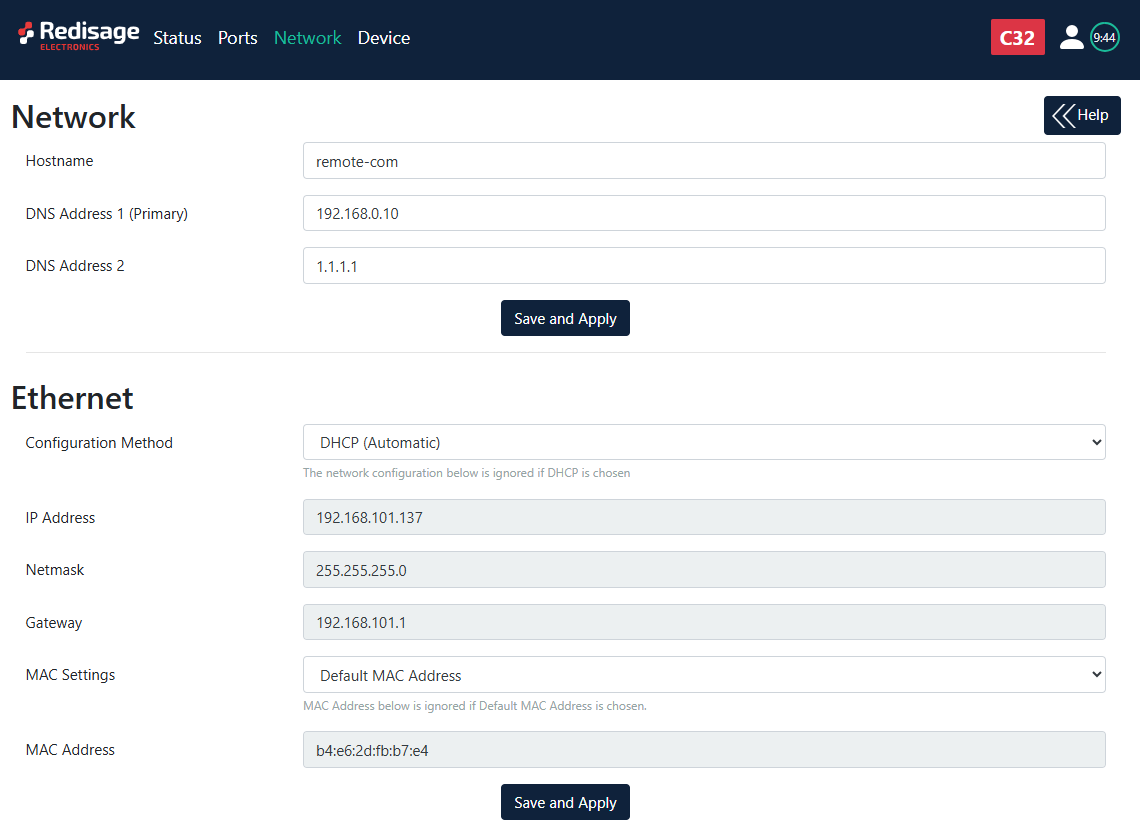
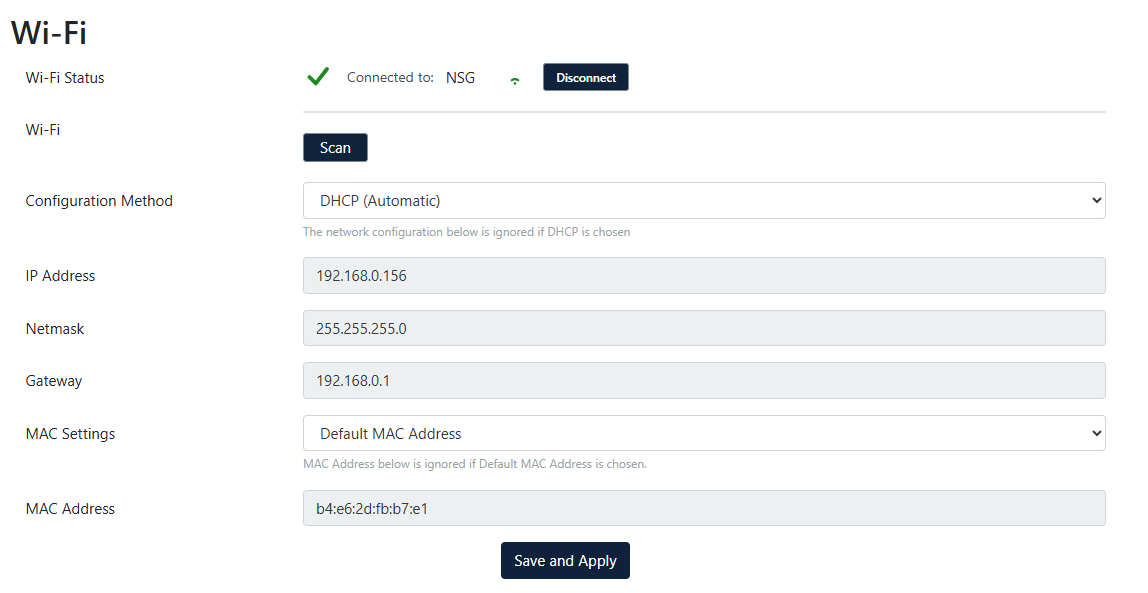
|
Item |
Description |
|
Configuration Method |
Enable/disable the DHCP server. If the DHCP server is disabled, the IP address of the device has to be set manually. |
|
IP Address |
IP address of the device. |
|
Netmask |
Netmask associated with the IP address. |
|
Gateway |
Gateway address currently used by the device. |
|
MAC Settings |
Allow setting the default MAC address or typing it manually. |
|
MAC Address |
Allow changing the physical address of the device. |
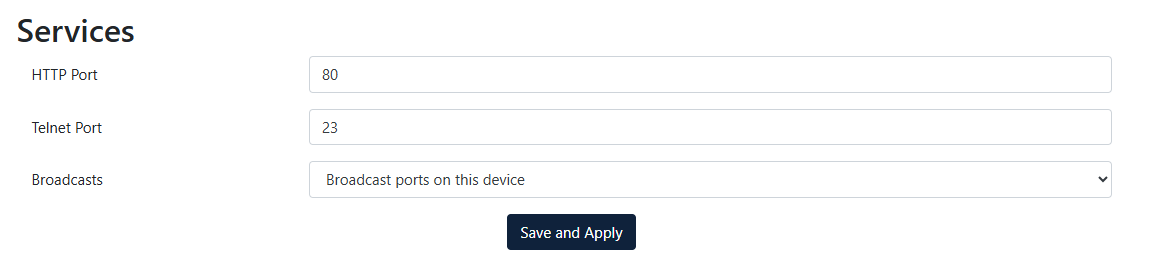
|
Item |
Description |
|
HTTP Port |
Determine the port of the control panel. |
|
Telnet Port |
Allow connection with the device via Telnet. |
|
Broadcasts |
Notify RemoteCOM clients in the same network about this device's existence. With this enabled, the Configurator will automatically set most of the settings correctly after picking the correct port. |
|
Hostname |
Label that is assigned to the device. |
|
DNS Address 1 (Primary) |
Primary Domain Name System used by the device. |
|
DNS Address 2 |
Domain Name System used by the device. |
It is possible to obtain a dynamic IP address. Just switch configuration method from static IP to DHCP (automatic). This process may cause some issues with identifying converters in LAN unless there is an access to the device which is responsible for allocating IP addresses.
Keep in mind that in case of changed IP address user needs to type new IP in the address bar and log in again.
Device page
On the device page there are tools used to a firmware update, a factory reset and a device reboot.
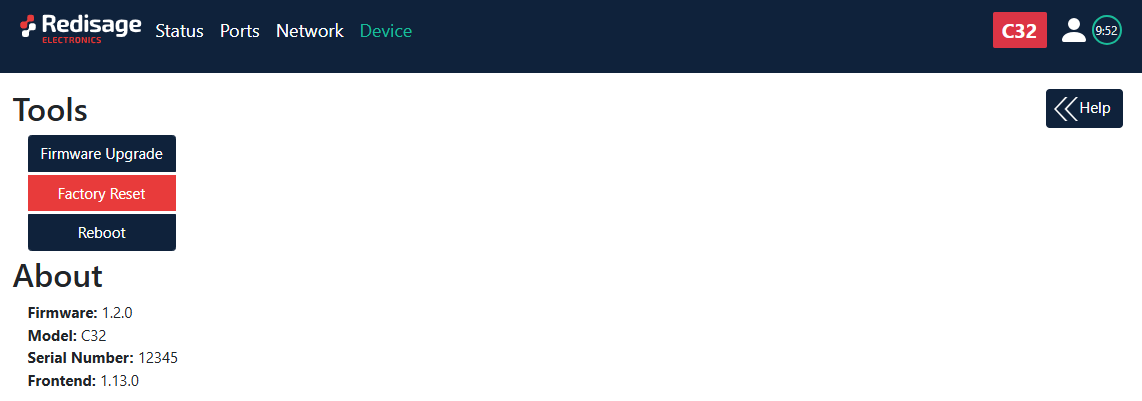
|
Item |
Description |
|
Firmware Update |
Update firmware. |
|
Factory Reset |
Restore default ports settings and default network configuration. |
|
Reboot |
Reboot the device. |
Firmware update
The device firmware update must not be interrupted. Update the device only if experiencing issues, being instructed to do so by our support or requiring the latest features/bugfixes. Failure during the update may 'brick' the device and make it unusable.
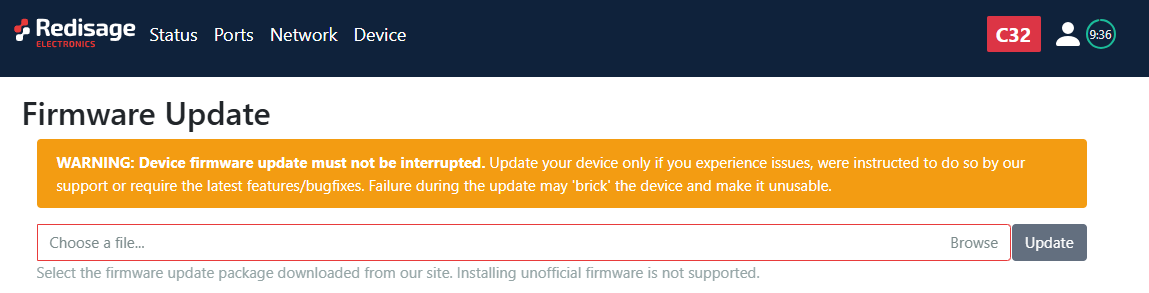
Use the remote-com-esp32.fir file for a firmware update.
Factory reset
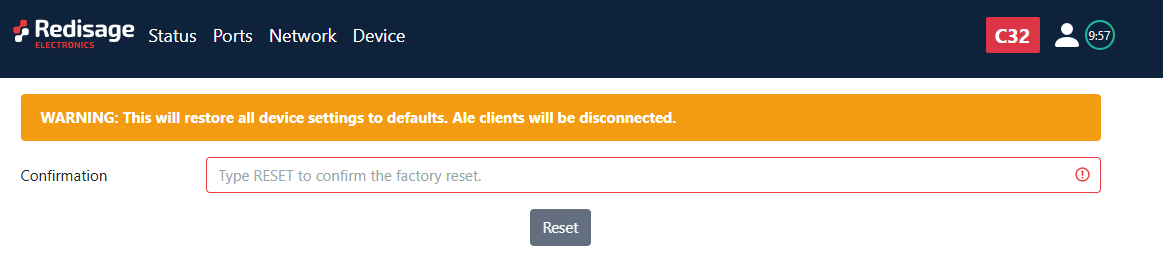
To restore default settings, press the “Factory Reset” button. After that, user will be asked to type “RESET”. Then it will take a few seconds to reload the web page and restart the device.
Configuration by the Telnet Console
Serial Port Server w/ Wi-Fi® (C30 - C32)
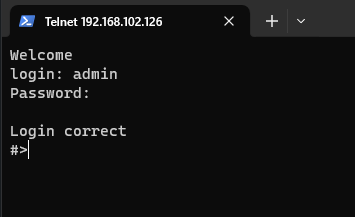
The device can be also configured via the Telnet Console. Firstly, make sure that converter is connected to the power supply and to the LAN using a patch cord. Knowledge of the device’s IP address (default is 192.168.100.100) and Telnet port number (default is 23) is necessary to establish a connection.
Use command below in a terminal window to connect to the device:
telnet <ip_address> <port_number>If the connection is successful there will be a login prompt visible. Log in using user’s personal credentials or the default login details (login: admin, password: admin123). If login is successful, it will be possible to start typing configuration commands.
The configuration is available only if devices are connected to the same Local Area Network as the computer used for it.
List of all commands
|
Command |
Description |
|
help |
Print the help. |
|
conn |
Print active TCP connections. |
|
eth_mac |
Print or change MAC address. |
|
exit |
Close current CLI session. |
|
http_port |
Print or change default http port. |
|
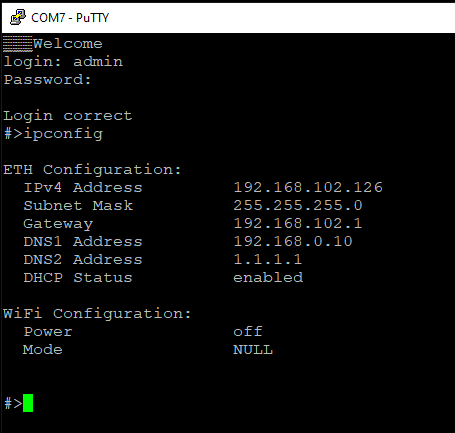
ipconfig |
Print or change the network configuration. |
|
net_stat |
Print lwIP statistics. |
|
ping |
Check internet connection with the desired host. |
|
restart |
Restart the system. |
|
reboot |
Same as restart. |
|
sys_heap_usage |
Print current heap usage. |
|
telnet_port |
Print or change default telnet port. |
|
uart |
Print or change uart configuration. |
|
uart_service |
Print or change uart_service configuration. |
|
user |
Print or change user configuration. |
|
wificonf |
Print or change the Wi-Fi configuration |
|
wifi_mac |
Print or change Wi-Fi MAC address. |
Ports configuration commands
In terms of ports configuration it is possible to change parameters like: service, baud rate, data bits, parity, stop bits and so on. UART commands are provided below.
- uart
- uart help
Print the help message. - uart list
List available uarts in the system.
Example:
uart list
0: baud: 9600 bits: 8 stop_bits: 1 parity: none (service console)
1: baud: 115200 bits: 8 stop_bits: 2 parity: odd (covered by cons.)
2: baud: 9600 bits: 8 stop_bits: 1 parity: none
3: baud: 1200 bits: 8 stop_bits: 2 parity: even termination: ON (R-COM)
3: baud: 38400 bits: 8 stop_bits: 2 parity: none termination: OFF - uart PORT_NUMBER baud BAUD
Set PORT_NUMBER baudrate to BAUD. BAUD value can be one of the following:
2400, 4800, 9600, 14400, 19200, 38400, 57600, 115200.
Example:
uart 1 baud 9600
WARNING: UART covered by console. Changes will take place after the reset. - uart PORT_NUMBER bits BITS
Set bit length to BITS. BITS value can be one only 8.
Example:
uart 2 bits 8 - uart PORT_NUMBER stop_bits STOP_BITS
Set stop_bits length to STOP_BITS. STOP_BITS value can be only 1 or 2.
Example:
uart 2 stop_bits 1 - uart PORT_NUMBER parity PARITY
Set uart parity to PARITY. PARITY value can be one of the following: none, odd, even.
Example:
uart 3 parity even - uart PORT_NUMBER termination STATE
Set uart termination to new STATE. STATE can be only ON or OFF.
Example:
uart 3 termination ON
- uart help
- uart_service
-
- uart_service help
Print the help message. - uart_service list
List of uarts services status.
Example:
uart_service list
1 state: ON service: Remote COM port: 1504 enc: YES
2 state: OFF service: TCP Socket port: 1510
3 state: OFF service: UDP Socket port: 1510 - uart_service UART_NUMBER state STATE
Set UART_NUMBER state to STATE. STATE value can be only ON or OFF.
Example:
uart_service 1 state ON - uart_service UART_NUMBER service SERVICE
Set UART_NUMBER service to SERVICE. SERVICE value can be one of the following: Remote COM, TCP Socket, UDP Socket.
Example:
uart_service 1 service TCP Socket - uart_service UART_NUMBER port PORT_NUMBER
Set UART_NUMBER port to PORT_NUMBER. PORT_NUMBER value can be any in the range: 1-65535.
Example:
uart_service 1 port 1501 - uart_service UART_NUMBER enc ENC_STATE
Set UART_NUMBER encryption to ENC_STATE. ENC_STATE can be only YES or NO.
Example:
uart_service 1 enc YES
If ENC_STATE is YES then it will ask for a new password for encryption.
- uart_service help
-
Network settings
The following commands might be helpful to change network settings according to target LAN parameters.
- ipconfig
- ipconfig addr ADDRESS
Set IP address to ADDRESS.
Example:
ipconfig addr 192.168.0.10 - ipconfig mask NETMASK
Set subnet mask to NETMASK (in dot-decimal format).
Example:
ipconfig mask 255.255.255.0 - ipconfig mask BIT_COUNT
Set subnet mask to BIT_COUNT bits.
Example:
ipconfig mask 24 - ipconfig gateway GATEWAY_IP
Set network gateway to GATEWAY_IP.
Example:
ipconfig gateway 192.168.0.1 - ipconfig dhcp enable/disable
Enable or disable DHCP client.
Example:
ipconfig dhcp enable - ipconfig dns1 ADDRESS
Set primary DNS to ADDRESS, disable getting DNS from DHCP if enabled.
Example:
ipconfig dns1 192.168.100.1 - ipconfig dns2 ADDRESS
Set secondary DNS to ADDRESS, disable getting DNS from DHCP if enabled.
Example:
ipconfig dns2 1.1.1.1 - ipconfig -w
Show information about Wi-Fi connection
- ipconfig addr ADDRESS
- eth_mac
- eth_mac help
Print the help message. - eth_mac default
Set device’s MAC address to factory-default one. - eth_mac set MAC_ADDR
Set device’s MAC address to MAC_ADDR. Accepts both dash and colon-separated formats.
Example:
eth_mac set 01-02-03-04-05-06
Example:
eth_mac set 01:02:03:04:05:06
- eth_mac help
- http_port
- http_port help
Print the help message. - http_port PORT_NUMBER
Set http port to PORT_NUMBER. A PORT_NUMBER value must be in range: 1-65535.
Example:
http_port 80 - http_port status
Print current http port.
Example:
http_port status
A current http port is 80
- http_port help
- telnet_port
-
- telnet_port help
Print the help message. - telnet_port PORT_NUMBER
Set Telnet port to PORT_NUMBER. A PORT_NUMBER value must be in range: 1-65535.
Example:
telnet_port 23 - telnet_port status
Print current Telnet port.
Example:
telnet_port status
A current telnet port is 23
- telnet_port help
-
- wificonf
-
- wificonf help
Print the help message - wificonf ssid SSID
Type SSID of target access point
Example:
wificonf ssid SSID - wificonf password PASSWORD
Type password of target AP.
Example:
wificonf password PASSWORD - wificonf connect
Try to connect to the configured Access Point. A result of the connection can be checked by 'wificonf status'. - wificonf disconnect
Disconnect from the AP. - wificonf status
Show the current connection status. - wificonf scan
Scan Wi-Fi networks.
- wificonf help
-
- wifi_mac
-
- wifi_mac help
Print the help message - wifi_mac default
Set device's MAC address to factory-default one. - wifi_mac set MAC_ADDR
Set device's MAC address to MAC_ADDR. Accepts both dash- and colon-separated formats.
Example:
wifi_mac set 01-02-03-04-05-06 - without any parameter print current MAC state
- wifi_mac help
-
Changing username or password
To change username or password, use user command. Available commands:
- user help
Print the help message. - user mod_name USER_NAME NEW_NAME
Change the user name to NEW_NAME. It fails if the name is used by another user.
Example:
user mod_name admin john - user passwd USER_NAME
Change USER_NAME's password.
Example:
user passwd admin
****** <- here is entered password, but '*' appears instead
Note: Everyone can change the password for themselves.
Additional notes
After some time of inactivity, session will be disconnected automatically.
In order to avoid issues like connecting to the host, type “help” to get more information.
To get more details about every particular command, append “help” after each commands (example: "ipconfig help").
Factory reset is not available from the Telnet Console level.
Configuration by the Serial Console
Serial Port Server w/ Wi-Fi® (C30 - C32)
Another way to configure the device is via a serial console. C30 - C32 require a dedicated USB/UART converter connected to the USB micro-B connector on the front of the device (check our converters).
Procedure to enter serial console mode on C30 - C32
- Turn off the power of the device.
- Connect Ethernet converter to the dedicated USB/UART converter via the microUSB port.
- Connect USB/UART converter to the PC.
- Open the serial console (default baud rate is 115200 bps).
- Short the FG and GND ports.
- Turn on the power.
- Wait until the ST indicator (orange LED) lights up (it should light up after red light - service mode).
- Open the the DI and GND ports.
- Login using user’s personal credentials or default login details.
- If the process is successful, configuration commands can be typed into the terminal.
Once this is done, log in using the default username and password, then change the network settings using "ipconfig" command.
List of all commands
|
Command |
Description |
|
help |
Print the help. |
|
conn |
Print active TCP connections. |
|
eth_mac |
Print or change MAC address. |
|
exit |
Close current CLI session. |
|
http_port |
Print or change default http port. |
|
ipconfig |
Print or change the network configuration. |
|
net_stat |
Print lwIP statistics. |
|
ping |
Check internet connection with the desired host. |
|
restart |
Restart the system. |
|
reboot |
Same as restart. |
|
sys_heap_usage |
Print current heap usage. |
|
telnet_port |
Print or change default telnet port. |
|
uart |
Print or change uart configuration. |
|
uart_service |
Print or change uart_service configuration. |
|
user |
Print or change user configuration. |
|
wificonf |
Print or change the Wi-Fi configuration |
|
wifi_mac |
Print or change Wi-Fi MAC address. |
Ports configuration commands
In terms of ports configuration it is possible to change parameters like: service, baud rate, data bits, parity, stop bits and so on. UART commands are provided below.
- uart
- uart help
Print the help message. - uart list
List available uarts in the system.
Example:
uart list
0: baud: 9600 bits: 8 stop_bits: 1 parity: none (service console)
1: baud: 115200 bits: 8 stop_bits: 2 parity: odd (covered by cons.)
2: baud: 9600 bits: 8 stop_bits: 1 parity: none
3: baud: 1200 bits: 8 stop_bits: 2 parity: even termination: ON (R-COM)
3: baud: 38400 bits: 8 stop_bits: 2 parity: none termination: OFF - uart PORT_NUMBER baud BAUD
Set PORT_NUMBER baudrate to BAUD. BAUD value can be one of the following:
2400, 4800, 9600, 14400, 19200, 38400, 57600, 115200.
Example:
uart 1 baud 9600
WARNING: UART covered by console. Changes will take place after the reset. - uart PORT_NUMBER bits BITS
Set bit length to BITS. BITS value can be one only 8.
Example:
uart 2 bits 8 - uart PORT_NUMBER stop_bits STOP_BITS
Set stop_bits length to STOP_BITS. STOP_BITS value can be only 1 or 2.
Example:
uart 2 stop_bits 1 - uart PORT_NUMBER parity PARITY
Set uart parity to PARITY. PARITY value can be one of the following: none, odd, even.
Example:
uart 3 parity even - uart PORT_NUMBER termination STATE
Set uart termination to new STATE. STATE can be only ON or OFF.
Example:
uart 3 termination ON
- uart help
- uart_service
-
- uart_service help
Print the help message. - uart_service list
List of uarts services status.
Example:
uart_service list
1 state: ON service: Remote COM port: 1504 enc: YES
2 state: OFF service: TCP Socket port: 1510
3 state: OFF service: UDP Socket port: 1510 - uart_service UART_NUMBER state STATE
Set UART_NUMBER state to STATE. STATE value can be only ON or OFF.
Example:
uart_service 1 state ON - uart_service UART_NUMBER service SERVICE
Set UART_NUMBER service to SERVICE. SERVICE value can be one of the following: Remote COM, TCP Socket, UDP Socket.
Example:
uart_service 1 service TCP Socket - uart_service UART_NUMBER port PORT_NUMBER
Set UART_NUMBER port to PORT_NUMBER. PORT_NUMBER value can be any in the range: 1-65535.
Example:
uart_service 1 port 1501 - uart_service UART_NUMBER enc ENC_STATE
Set UART_NUMBER encryption to ENC_STATE. ENC_STATE can be only YES or NO.
Example:
uart_service 1 enc YES
If ENC_STATE is YES then it will ask for a new password for encryption.
- uart_service help
-
Network settings
The following commands might be helpful to change network settings according to target LAN parameters.
- ipconfig
- ipconfig addr ADDRESS
Set IP address to ADDRESS.
Example:
ipconfig addr 192.168.0.10 - ipconfig mask NETMASK
Set subnet mask to NETMASK (in dot-decimal format).
Example:
ipconfig mask 255.255.255.0 - ipconfig mask BIT_COUNT
Set subnet mask to BIT_COUNT bits.
Example:
ipconfig mask 24 - ipconfig gateway GATEWAY_IP
Set network gateway to GATEWAY_IP.
Example:
ipconfig gateway 192.168.0.1 - ipconfig dhcp enable/disable
Enable or disable DHCP client.
Example:
ipconfig dhcp enable - ipconfig dns1 ADDRESS
Set primary DNS to ADDRESS, disable getting DNS from DHCP if enabled.
Example:
ipconfig dns1 192.168.100.1 - ipconfig dns2 ADDRESS
Set secondary DNS to ADDRESS, disable getting DNS from DHCP if enabled.
Example:
ipconfig dns2 1.1.1.1 - ipconfig -w
Show information about Wi-Fi connection
- ipconfig addr ADDRESS
- eth_mac
- eth_mac help
Print the help message. - eth_mac default
Set device’s MAC address to factory-default one. - eth_mac set MAC_ADDR
Set device’s MAC address to MAC_ADDR. Accepts both dash and colon-separated formats.
Example:
eth_mac set 01-02-03-04-05-06
Example:
eth_mac set 01:02:03:04:05:06
- eth_mac help
- http_port
- http_port help
Print the help message. - http_port PORT_NUMBER
Set http port to PORT_NUMBER. A PORT_NUMBER value must be in range: 1-65535.
Example:
http_port 80 - http_port status
Print current http port.
Example:
http_port status
A current http port is 80
- http_port help
- telnet_port
-
- telnet_port help
Print the help message. - telnet_port PORT_NUMBER
Set Telnet port to PORT_NUMBER. A PORT_NUMBER value must be in range: 1-65535.
Example:
telnet_port 23 - telnet_port status
Print current Telnet port.
Example:
telnet_port status
A current telnet port is 23
- telnet_port help
-
- wificonf
-
- wificonf help
Print the help message - wificonf ssid SSID
Type SSID of target access point
Example:
wificonf ssid SSID - wificonf password PASSWORD
Type password of target AP.
Example:
wificonf password PASSWORD - wificonf connect
Try to connect to the configured Access Point. A result of the connection can be checked by 'wificonf status'. - wificonf disconnect
Disconnect from the AP. - wificonf status
Show the current connection status. - wificonf scan
Scan Wi-Fi networks.
- wificonf help
-
- wifi_mac
-
- wifi_mac help
Print the help message - wifi_mac default
Set device's MAC address to factory-default one. - wifi_mac set MAC_ADDR
Set device's MAC address to MAC_ADDR. Accepts both dash- and colon-separated formats.
Example:
wifi_mac set 01-02-03-04-05-06 - without any parameter print current MAC state
- wifi_mac help
-
Changing username or password
To change username or password, use user command. Available commands:
- user help
Print the help message. - user mod_name USER_NAME NEW_NAME
Change the user name to NEW_NAME. It fails if the name is used by another user.
Example:
user mod_name admin john - user passwd USER_NAME
Change USER_NAME's password.
Example:
user passwd admin
****** <- here is entered password, but '*' appears instead
Note: Everyone can change the password for themselves.
Service mode
Procedure to enter service mode for C30 - C32 converters
- Turn off the power of the device.
- Connect Ethernet converter to the dedicated USB/UART converter via the microUSB port.
- Connect the USB/UART converter to the PC.
- Open the serial console (default baud rate is 115200 bps).
- Short the DI and GND ports.
- Turn on the power.
- Wait until the ST indicator (red LED) lights up.
- Open the the DI and GND ports.
- If the process is successful, service commands can be typed into the terminal.
List of commands in the service mode
|
Command |
Description |
|
help |
Print the help. |
|
credits |
Print current credits value for this device. |
|
dev_ident |
Print the device identification value. |
|
restart |
Restart the system. |
|
serial_num |
Print the serial number of this device. |
|
version |
Display the bootloader version. |
|
xmodem |
Download image to the internal flash using xmodem. |
|
defaults |
Reset application variables to defaults. |
|
ipconfig |
Print or change the network configuration. |
|
flash_read |
Read bytes from flash memory. |
|
md |
Read bytes from memory address. |
In the service mode, the “ipconfig” command can only show a last static IP address.
Factory reset
To restore default settings, type “defaults”. After that, user will be asked to type “default network” to reset the network settings as well. Then user will be informed if the process is successful.
Additional notes
In order to avoid issues like connecting to host, type “help” to get more information.
To get more details about every particular command, append “help” after each commands (example: "ipconfig help").
Redisage Configurator
Serial Port Server w/ Wi-Fi® (C30 - C32)
Redisage Configurator is an app used to emulate connection between converter and a PC as if its RS232/RS485 ports would be connected directly to the COM port. The advantage of that functionality is lack of additional cables. Transmission can be tested over Ethernet. First connect the device to a local network using the Ethernet port and power it up. During the configuration process set “Service” to the RemoteCOM option on the “Ports” page.
While changing port service from RemoteCOM to TCP/UDP Socket make sure to disable RemoteCOM virtual port in the Redisage Configurator first.
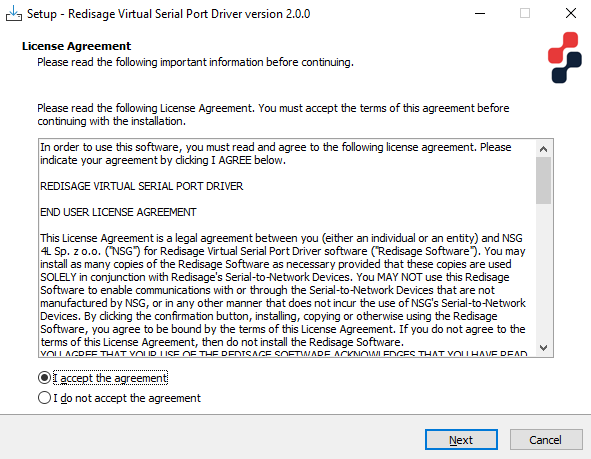
Redisage VSP Driver
In order for Redisage Configurator to work properly, it is necessary to install the Redisage VSP Driver. It can be done with RedisageVSPDriver Installer available for Windows. You can download it for free here.
Redisage Configurator
When the device is configured open the Redisage Configurator app.
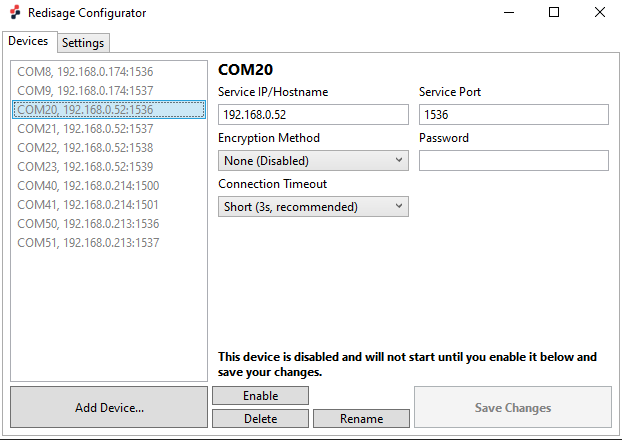
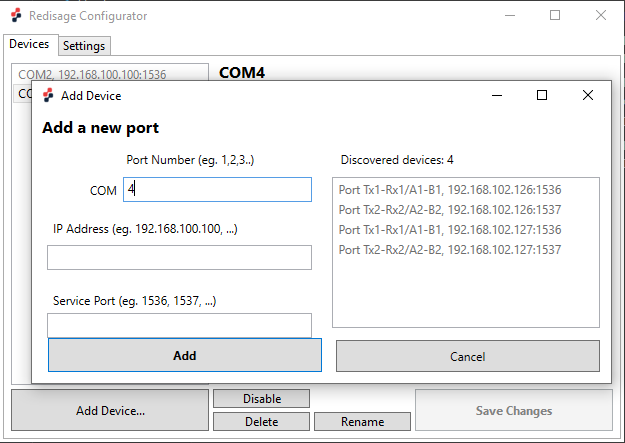
Use the “Add Device” button to set up a new connection with a device. On the right side there should be a list of available devices visible. Choose one of them or specify a custom COM port number, an IP address and a service port number.
While specifying a custom virtual COM make sure to use the same IP address and service port as set earlier in the port configuration.
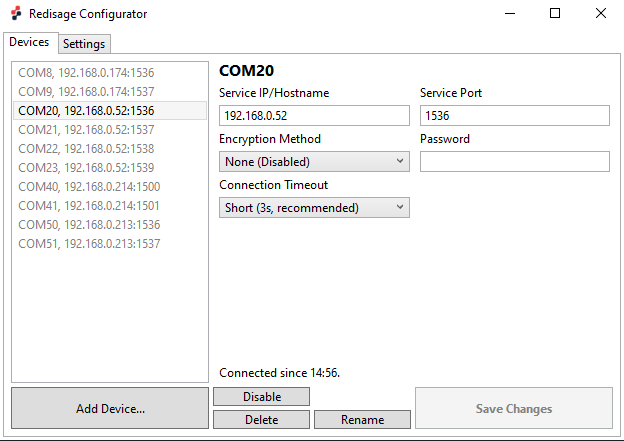
In order to establish a connection with a desired device use the “Enable” button. To end the connection use the “Disable” button. Service IP/hostname, service port and password can be modified at any time. There are also available 2 options of the encryption methods (none (disabled) or strong (AES-GCM 128-bit, Argon2)) and 5 options of the connection timeout (brief, short, fair, modest or lengthy). Changes have to be saved with “Save Changes” button.
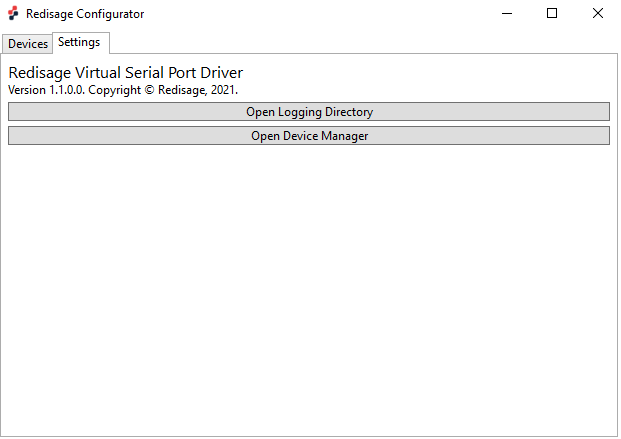
There is also the “Settings” tab at the top of the window from where the Logging Directory or the Device Manager can be opened.
If everything is connected properly there should be a new COM port available in the Device Manager. It is also possible to check it, for example, on the web page.
If any change is made to the port configuration, make sure to apply it with the “Save Changes” button.
Troubleshooting
If a discovered device cannot be added, check if it hadn’t been added before with a different COM port / service port. In that case, delete previous configuration from the Redisage Configurator.
If that doesn't work, check if the port service was configured correctly for the RemoteCOM Service.